Could Entrepreneurship Become the ‘Everyday Job’ of the AI Future?
2026-11-16
Could Entrepreneurship Become the ‘Everyday Job’ of the AI Future?
AI may not only change the jobs people do. It could give millions of people the tools to create work for themselves.
By Diane Shawe, Founder of XpressPrompts
For decades, when someone became unemployed, the expected response was straightforward: update the CV, search the job boards, retrain if necessary and try to find another employer.
Artificial intelligence may be beginning to change that assumption.
I believe we are approaching a period in which entrepreneurship becomes a realistic option for far more ordinary people — including experienced workers displaced from established careers, women returning to work, graduates struggling to secure their first meaningful role, freelancers, mature workers and people who have never previously considered themselves entrepreneurs.
Instead of asking only:
“Who will employ me?”
we may increasingly ask:
“What do I already know that somebody will pay me to help them with — and how can AI help me turn that knowledge into something useful?”
That is a very different conversation.
From unemployment to AI-enabled entrepreneurship
Starting a business traditionally required several things at once: money, specialist knowledge, marketing skills, administration, research capability, design support and often a team of people.
AI is beginning to compress some of those requirements.
One person can now use AI to help research an idea, structure a business plan, draft communications, develop marketing material, explore potential customers, create images, prepare presentations, analyse information and produce content.
That does not mean AI automatically creates a successful business.
Judgement, knowledge, resilience, customer understanding and the willingness to act still belong to the human being.
But the entry point is changing.
Venture investor Alexa von Tobel recently described entrepreneurship as potentially becoming the “everyday job of the future,” arguing that AI could enable people with almost any skill set to turn that knowledge into a business. She also suggested entrepreneurship may become a lower-stakes option for people between jobs while they retrain or search for their next opportunity.
I think that idea deserves serious attention.
The numbers are starting to point in an interesting direction
Research published in July 2026 by labour economist Liya Palagashvili at George Mason University’s Mercatus Center found that, between the first quarter of 2024 and the first quarter of 2026, non-employer-type business applications in AI-exposed sectors increased by 26.8%.
These are applications showing no early indication that the business intends to employ staff.
Importantly, the research is preliminary and descriptive; it does not prove AI caused the increase. But it raises an intriguing possibility: AI may be lowering the operating threshold for independent knowledge workers and solo businesses.
Perhaps the first major employment effect of AI will not simply be people losing jobs.
Perhaps part of it will be people reorganising how they earn.
This is not just a conversation for twenty-somethings
This matters particularly to experienced workers.
Someone may have spent 20 or 30 years working in logistics, beauty, retail, construction, healthcare, finance, administration, education, customer service or manufacturing.
If their role disappears, their knowledge does not disappear with it.
They still understand customers.
They still know where organisations waste time.
They recognise problems younger workers may never have encountered.
They understand processes, suppliers, complaints, deadlines, quality, negotiation and human behaviour.
Those things have economic value.
The opportunity created by AI is not necessarily to turn everybody into a software developer.
It is to help more people package what they already understand into something someone else can buy.
That could be consulting, training, digital products, specialist services, research, content, coaching, online retail, micro-businesses or entirely new services that have not yet been created.
The Skill Renaissance
This thinking also runs through my book, The Skill Renaissance: AI’s Impact on Academic, Experiential Knowledge and the Future of Work.
The central argument is that we have relied too heavily on academic qualifications as the primary measure of capability.
The book describes a movement towards a more dynamic, skill-centric approach to education and employment, challenging the assumption that academic qualifications alone determine what someone is capable of.
One section describes this directly as “Skills Over Degrees”, arguing that AI is increasing the importance of skills, competencies and practical experience alongside formal education.
That becomes particularly important when we think about people displaced by AI.
They should not automatically be treated as people who must start again.
They may instead need help repositioning what they already know.
Learn it by doing it
One of the strongest themes in The Skill Renaissance is experiential knowledge — learning by doing.
Internships, apprenticeships and practical experience create the bridge between theoretical knowledge and what happens in the real world. The book argues that direct experience develops skills and expertise that classroom knowledge alone cannot provide.
That principle applies equally to AI entrepreneurship.
You can watch 50 videos about AI.
You can attend another AI seminar.
You can download another 100-page guide.
Eventually you have to use AI to do something.
Create the service.
Research the market.
Write the proposal.
Produce the advert.
Test the idea.
Speak to customers.
Improve it.
That is where capability develops.
Why I included 30 future-facing internship and apprenticeship sectors
In the book I deliberately included a directory of 30 internship, co-op and apprenticeship areas aimed not only at younger students but at people aged roughly 20 to 55.
Why?
Because a huge population of experienced workers will need opportunities to reskill as the transformation created by AI continues.
The list covers areas including software development and AI, digital marketing, data analytics, healthcare innovation, renewable energy, e-commerce, cybersecurity, virtual and augmented reality, biotechnology, content creation, FinTech, EdTech, robotics, automotive technology and sustainability.
The purpose was never simply to tell people, “Go and get another qualification.”
It was to encourage them to enter areas where they can acquire practical, future-facing experience and discover where their existing knowledge might intersect with emerging opportunities.
But there is still one problem: knowing what to ask AI
This is where my work eventually led me to XpressPrompts.
The problem I kept seeing was not simply access to AI.
People could open ChatGPT, Claude, Gemini or another AI tool.
But then came the blank box.
What do I ask it?
How do I explain what I need?
What command will produce the right type of result?
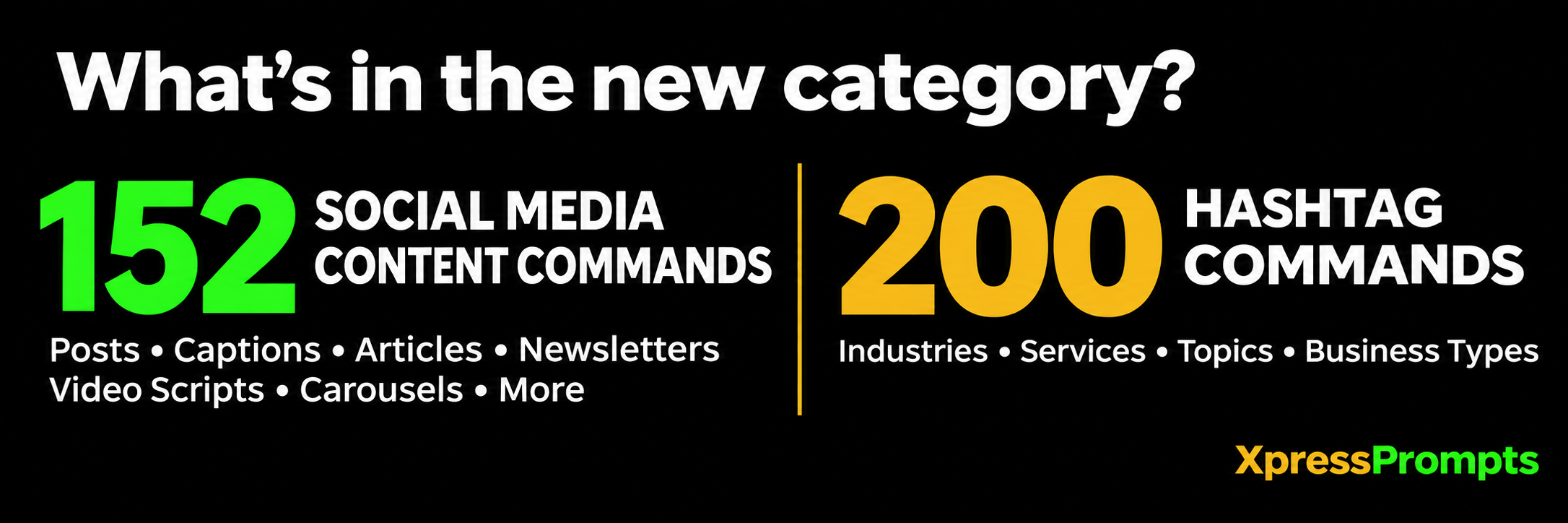
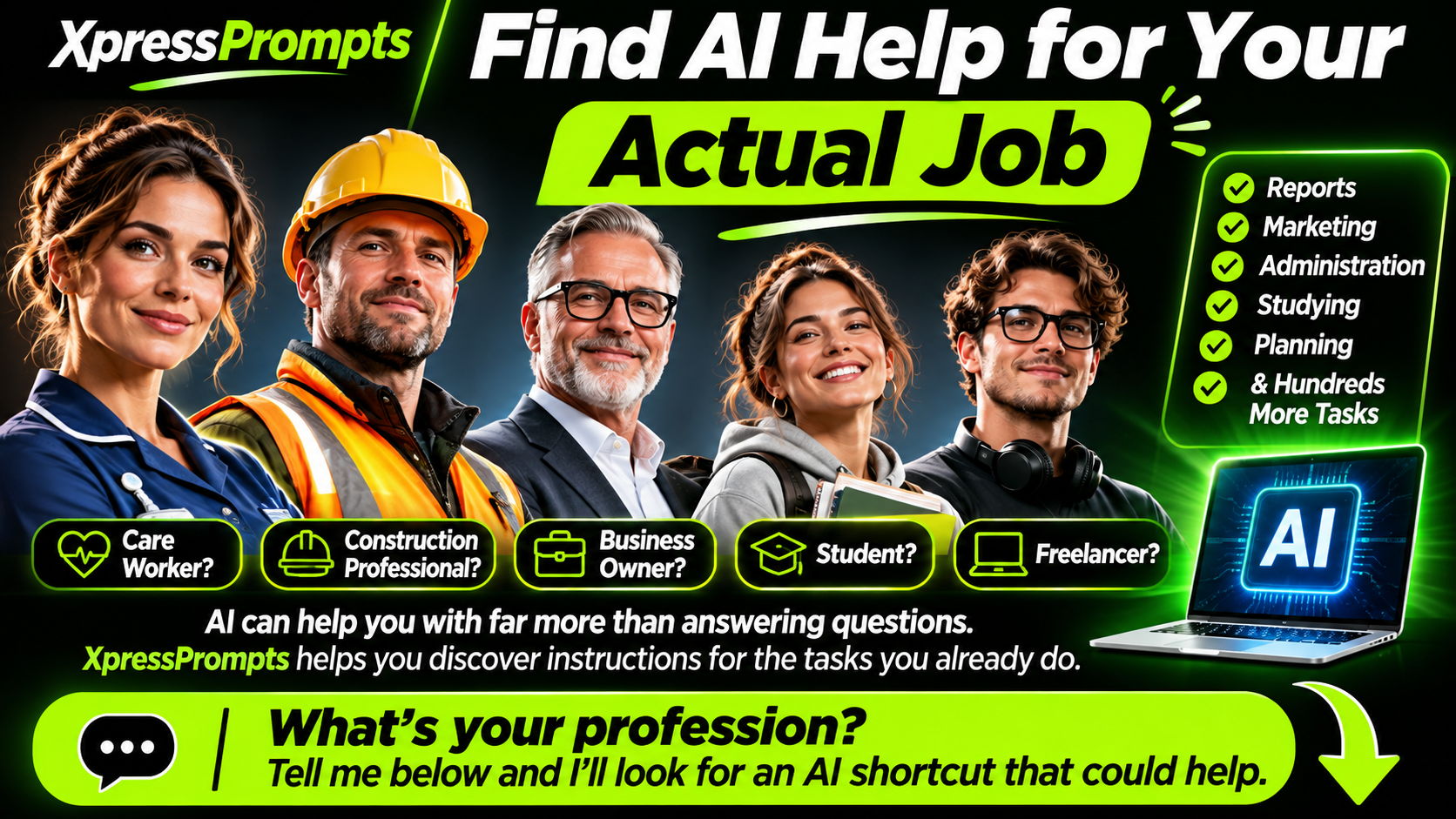
That gap led to the development of XpressPrompts — a searchable short-command prompt dictionary designed to help people identify the task they want AI to perform and give it a clearer instruction.
Instead of spending twenty minutes trying to engineer a long prompt, someone might search for the task they want to accomplish and begin with a short command.
For a new entrepreneur, those tasks could span almost the entire early business journey:
market research, business planning, customer personas, pricing, competitor analysis, email writing, proposals, social media, video scripts, promotional images, presentations, customer service, sales follow-ups and much more.
XpressPrompts does not replace the entrepreneur's judgement.
It helps them communicate that judgement to AI.
The entrepreneur still has to think
This distinction matters.
AI can generate.
It can analyse.
It can suggest.
It can accelerate.
But the entrepreneur remains responsible for deciding whether the result makes sense.
My book makes a similar argument around continuous learning and adaptation. In the AI era, technical capability alone will not be enough. Critical thinking, creativity, adaptability and other human capabilities remain essential because they provide perspectives and judgement that technology cannot simply replace.
That may become one of the defining capabilities of the next generation of entrepreneurs:
knowing when to use AI, knowing what to ask it, and knowing when not to accept its answer.
Women could become some of the biggest AI-era changemakers
I am particularly interested in what this shift could mean for women.
Women frequently accumulate enormous amounts of expertise that never appears neatly on a CV: caring responsibilities, community leadership, organisation, negotiation, budgeting, teaching, problem-solving, managing households, running side businesses and supporting other people.
AI could help transform some of that overlooked knowledge into economically useful products and services.
The next generation of AI entrepreneurs may not look like the traditional technology founder.
She may be 22.
She may be 42.
She may be 62.
She may have a degree.
She may have spent thirty years learning through work.
She may have just been made redundant.
What matters increasingly is whether she can recognise what she knows, identify a problem worth solving and use modern tools to turn that knowledge into value.
Perhaps we need to change the question
When somebody loses a job in the AI era, our first response should not necessarily be:
“What job can you apply for next?”
Perhaps we should also ask:
“What do you know?”
“What problems can you solve?”
“Who needs that knowledge?”
“Could AI help you turn it into an income?”
That does not mean entrepreneurship will be right for everybody.
But for millions of people, it may become a realistic additional route rather than a frightening leap reserved for a small group of founders with money, teams and technical backgrounds.
Entrepreneurship may indeed become one of the everyday jobs of the AI future.
And if that happens, perhaps one of the most valuable things we can give people is not another instruction to compete for the shrinking job they already had.
It is the confidence, practical experience and tools to create the next opportunity for themselves.
Short Commands. Fast Results.
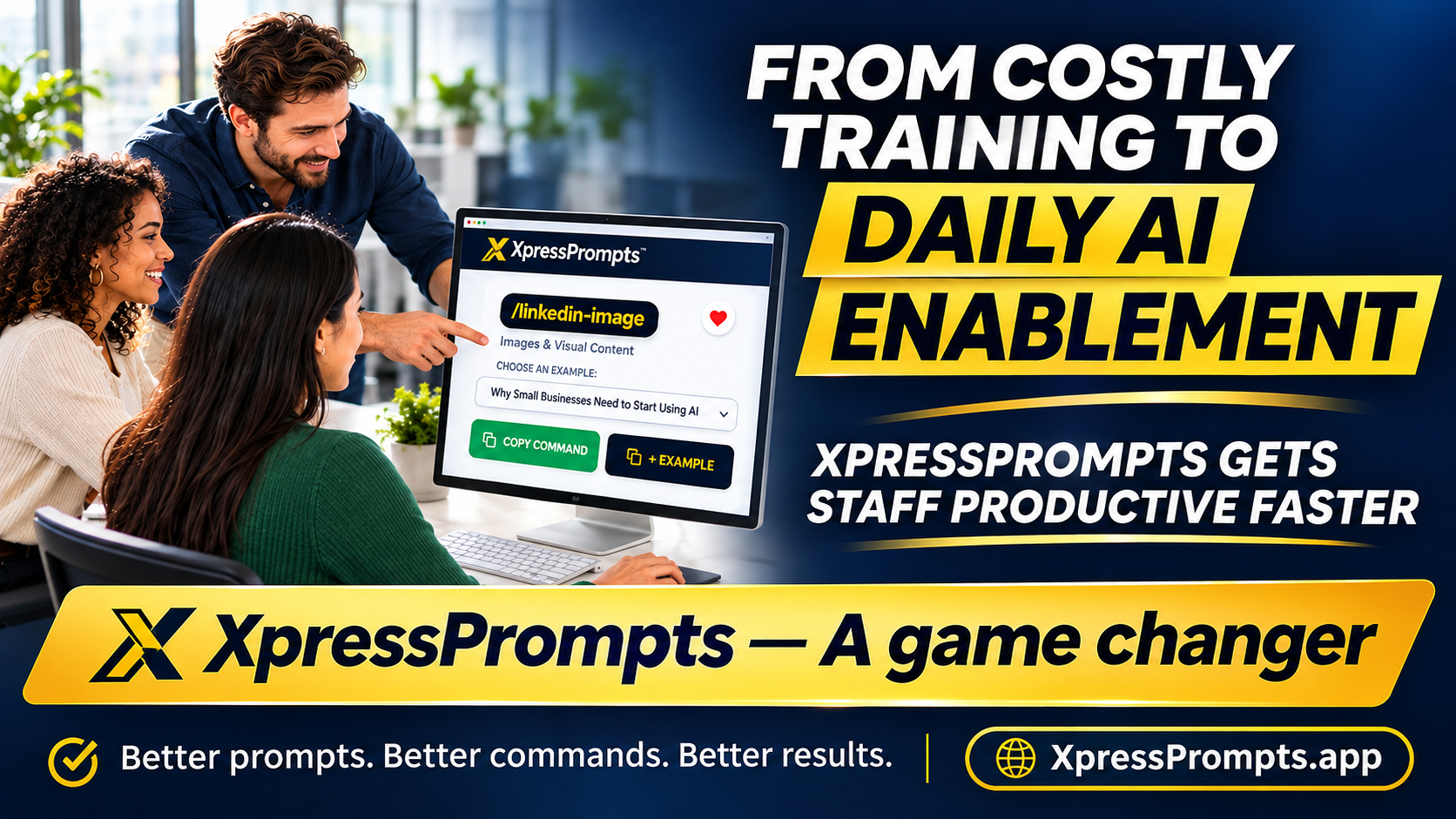
Author of The Skill Renaissance: AI’s Impact on Academic, Experiential Knowledge and the Future of Work
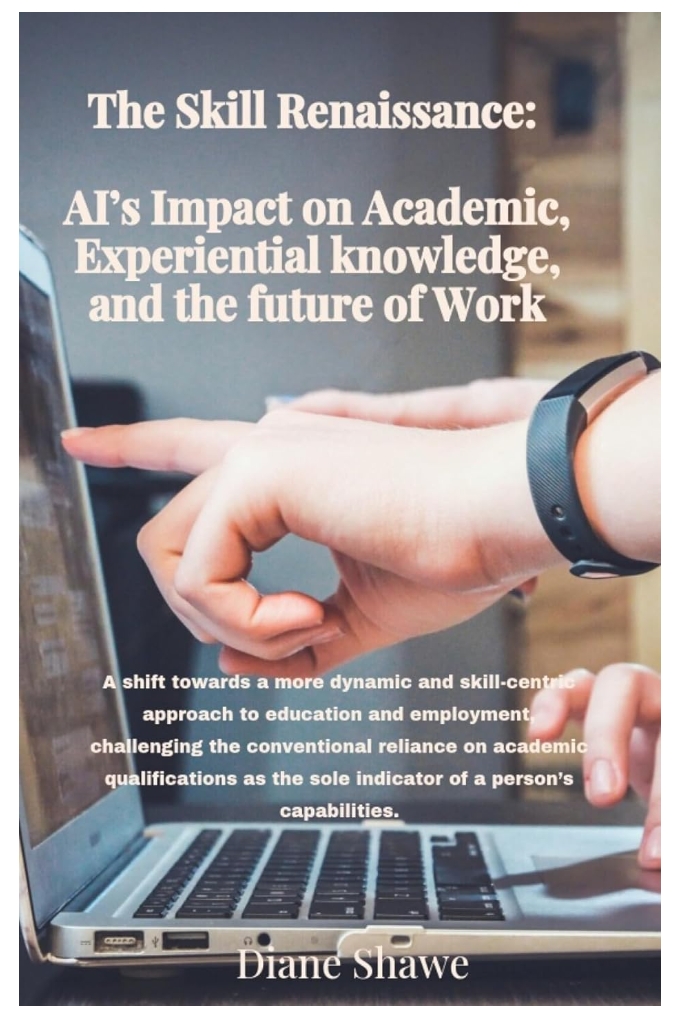
Get a copy: https://www.amazon.co.uk/Impact-Academic-Experiential-knowledge-future-ebook/dp/B0CRDCHZF1/?th=1
#ArtificialIntelligence #Entrepreneurship #FutureOfWork #Employment #CareerDevelopment